
Imposter Syndrome

Q: Antônio, my question is a bit cliché, but do you deal with impostor syndrome? How do you deal with self-criticism?
A: Dear asker,
I must be the worst person to answer this — or perhaps the worst person to give a positive, empowering answer — because I frequently fall into the terrible, paralyzing pit of self-criticism that keeps me from moving forward. In fact, maybe I’m in that pit right now; every now and then, I manage to climb halfway up the well, only to slip on some invisible pebble and tumble all the way down again.
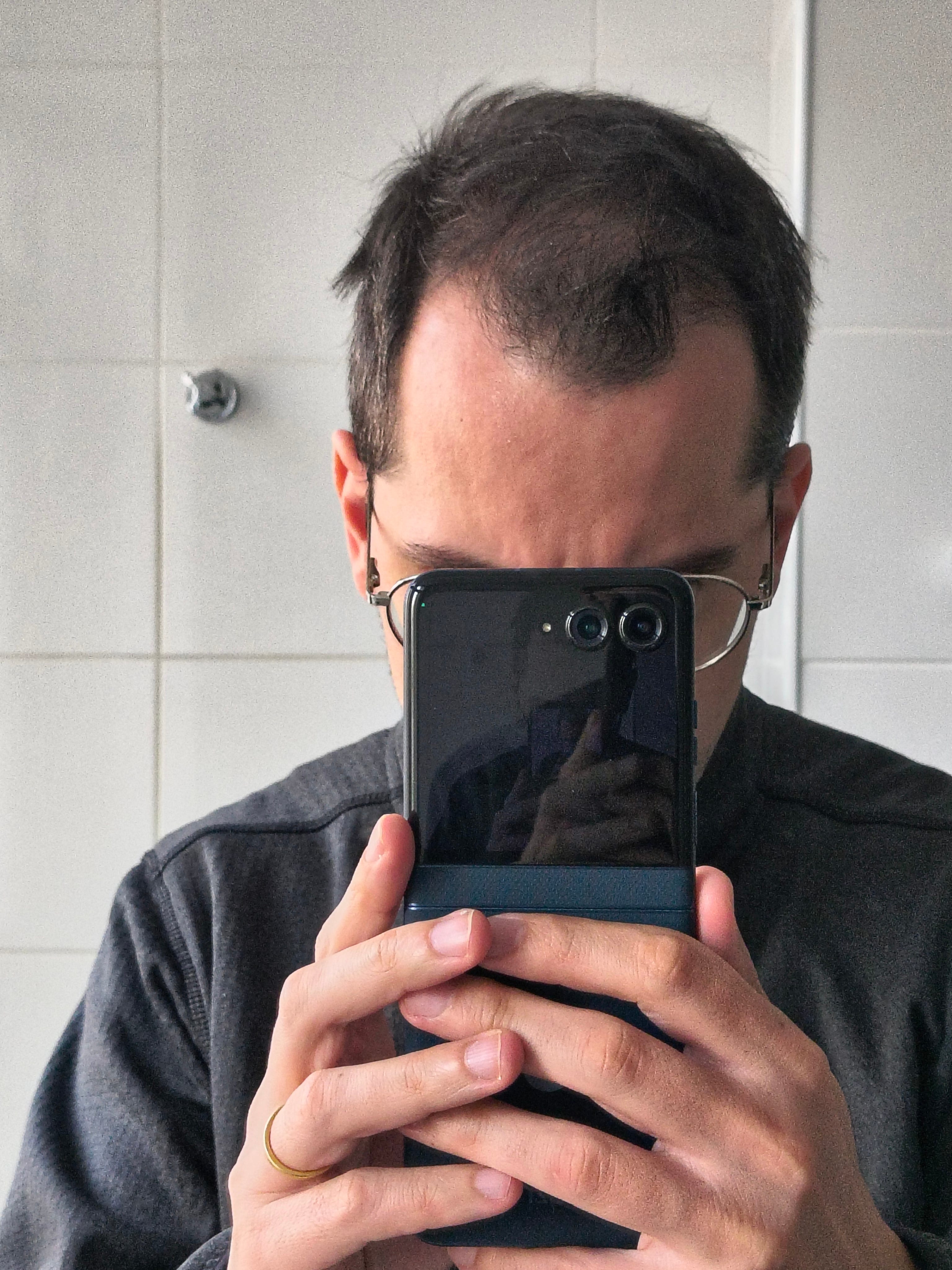
Let’s begin with the expression ‘impostor syndrome’ — calling it a syndrome assumes it’s a distortion of our self-image, like someone looking in the mirror and seeing a monster despite being a beautiful person. We feel like impostors because we receive validation from the outside world that doesn’t match our self-image, but this is considered a syndrome — that is, an illness — because supposedly we really are wonderful after all.
There’s the classic response that says we should embrace the label, perform as impostors, as grand masters of artifice, as professional deceivers, which has a certain Vila-Matas-esque charm.
Then there’s the other response: ‘Oh, stop it, honey, you shine sooo bright!’, which is about as reassuring as an OCD compulsion — that is, it may help for a few seconds, but it doesn’t last.
My own answer is that perhaps we really aren’t all that special, and that there is something worthwhile in looking at yourself in the mirror without filters and feeling discouraged. Okay, ‘worthwhile’ is a strong word. ‘Necessary’ is a contaminated word. (I can’t stand any more ‘necessary’ and/or ‘urgent’ books).
But we need to deal with this somehow, don’t we? Otherwise we become paralyzed. And I really do become paralyzed.
However, one thing that genuinely helps me — and that I recommend to my fellow asker — is reading bad fiction. Brazilian or foreign, as long as it’s contemporary. Pick up one of those wildly acclaimed books and arm yourself with a pen.
Then play at being a postmortem editor — that is, an editor after publication. Look at those clumsy sentences. That excess of adverbs. Or adjectives. That tired metaphor. That didacticism. That manichaeism. Bad fiction is profoundly stimulating and can actually boost our self-esteem. If this is being praised, well then, damn it, I can do better.
Of course, sometimes good fiction is stimulating too — reading Suttree by Cormac McCarthy invited me to think of alien, metaphysical metaphors for everyday things. Having models can be productive. But nothing pulls you out of the abyss quite like reading bad fiction.
And there is another thing, much harder to explain that sometimes helps me. Let me try. If there is something I loathe in bad fiction is how didactic it usually is. So, when writing, I always try to use language’s opacity, rejecting any narrative transparency. I love writing extremely ambiguous scene, one where you cannot exactly pinpoint what does the author thinks. I feel that working with ambiguity is a way to escape impostor syndrome, through a very strange mechanism. It’s like we are no longer ourselves, but this other narrative voice, whose intentions we cannot presume. We cannot, therefore, be frauds, because our ego has dissolved in language’s cloudy mirror. Lose yourself to writing – that is the ideal. And that might be the rope out of the pit I’m stuck in.
"It’s like we are no longer ourselves, but this other narrative voice, whose intentions we cannot presume. " And why not take this a step further and use the imposter part, trip it, twirl it, inverse it, and become the imposter who thinks they are the bloody dog's bollox! Might take a bit of cosplaying but I'm sure we're imaginative enough - we are fiction writers after all.