
Shocky's Corner
Here’s to Those Rabble Rousing Rebel Poets!

Bear with me being completely obnoxious while I brag a bit…
My 22-year-old nephew, Séan Abreu-Corrigan, just won the Fulbright Scholarship which is widely regarded as one of the most prestigious academic honours in the world.
Séan is a modest fellow and I’m sure he’ll be utterly mortified by me splashing this news all over my vast and esteemed array of Substack readers (cough), but what the heck. Let’s celebrate life’s victories when we can. Why not allow an auntie, as well as all the other aunties, uncles - the whole river of family members and all its tributaries - knock themselves out as they kvell with pride at this massive achievement.
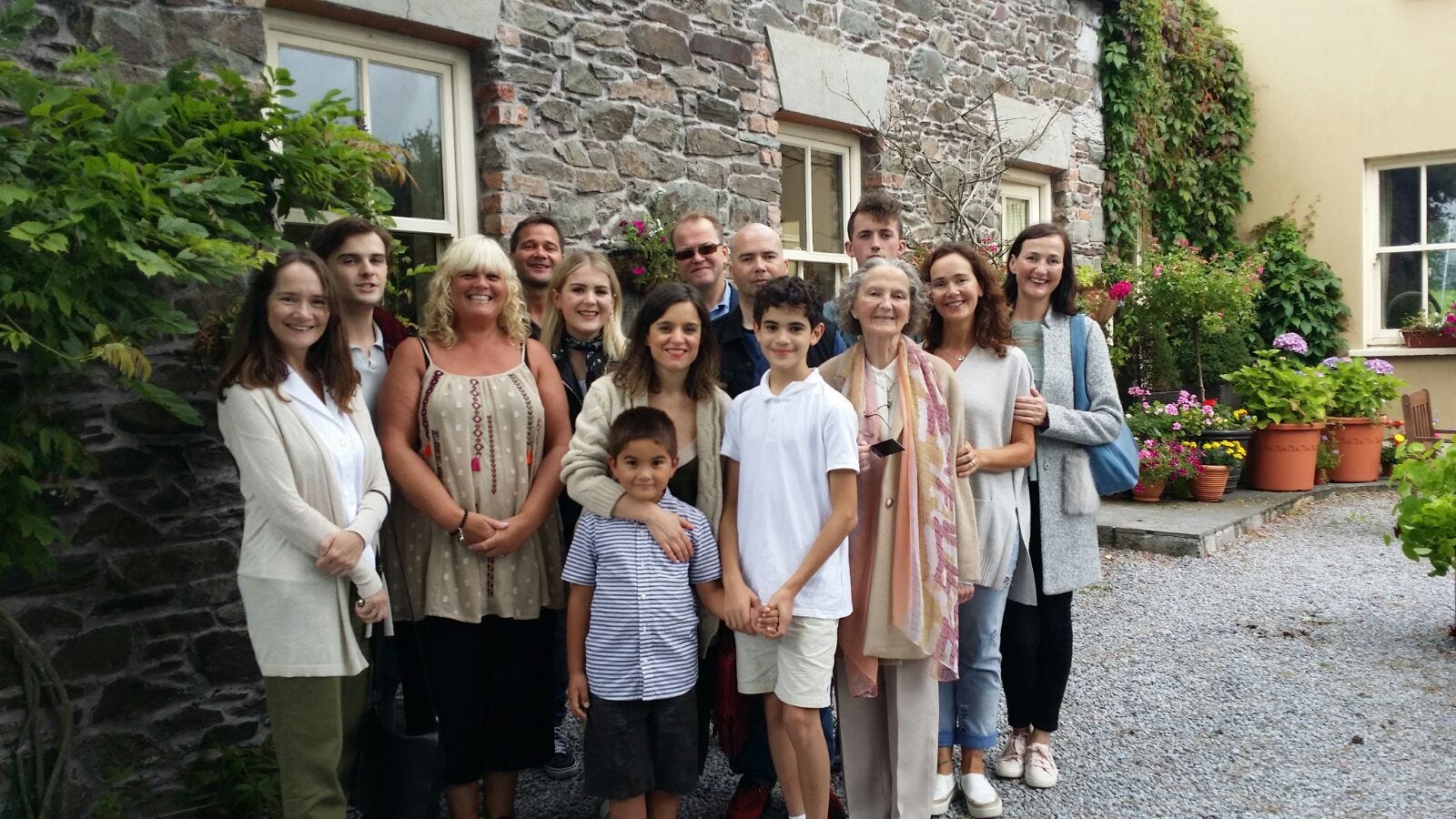
(A small family gathering from a few years back. Look at us all - proud as punch! And this was even before we knew we had a Fulbright Scholar in our midst.)
I cannot help but think of this honour blessing all of our family, reaching back in time through my mum, Eileen, and dad, Shocky, and as part of that great family river; rippling past them to the Reardons, Cotters, Cahalanes and beyond, yet again, the blessing shimmering its way through the murk of the past - working through boglands of time, moving through home evictions, famine, struggles for freedom and unspeakably tragic endings.
My sisters and brothers were recently gifted with archival evidence documenting the part my mum’s family, grandmother, great grandparents and great-uncles, played in the War of Independence at the start of the last century. What a bone chilling read those documents are.
It was before the 1920s really started roaring when Cahalane and Cotter rebels fought to unclench the mighty fist that had suffocated generations of Irish people for hundreds of years. Great Britain treated Ireland like its own larder and treasure chest for too long, taking what it wanted, leaving nothing in return. Bile gurgles in my stomach when I think of the British government’s extraordinary callousness (I’m trying to hold myself back here!) in particular during The Great Famine of 1845-47.
Driving around Ireland you’ll notice the fattest, happiest cows grazing on the lushest, greenest grass. The rich brown soil is gorgeously fertile. And if you look into those rivers cobbled with bountiful fish supplies you’ll quickly realise, there should never have been a famine. But those rivers belonged to the landed gentry and were protected by high walls and gun-toting gamekeepers. As for those acres upon acres of emerald-green meadows and sweet harvest? Egad! Not to be shared with the snivelling peasants! Instead, thousands of bushels of wheat, firkins of butter, pigs, sheep, and those happy, fat cows were shipped out of Ireland from under the noses of starving children dying in their thousands at the side of the road, their mouths stained green from eating nettles, and all that delicious food instead exported to feed soldiers around the world as the English expanded their global empire.
(I was going to put an image of the famine in Ireland here but it was too depressing so I thought I’d put a photo instead of a fat, happy cow I met in Donegal last year.)
Sadly, during those hellish years, music, poetry and dancing died.
Starvation may have quelled the poets, but before and after the famine, rebel poetry was interwoven into every historical beat in Irish history - political insurrections coupled with stirring words of literary defiance against the mighty colonial power of the next-door neighbour.
The tradition of Irish rebel poetry goes back to the 1500s, when Gaelic bards walked a delicate diplomatic tightrope as they grappled with Henry the Eighth overturning the rule of Irish chieftains and declaring himself King of Ireland. Later, The Curse of Cromwell by Kerryman, Éamonn an Dúna (c1650), laments the trauma of Cronwell’s cruelty during his, so-called, Holy War. Cronwell confiscated land from native landowners brutally subjugating them to work for his Parliamentarian supporters to whom he gifted the stolen land. Then came The Penal Laws –a punishing quasi-poem (rap?) against Catholics who refused to become Protestant:
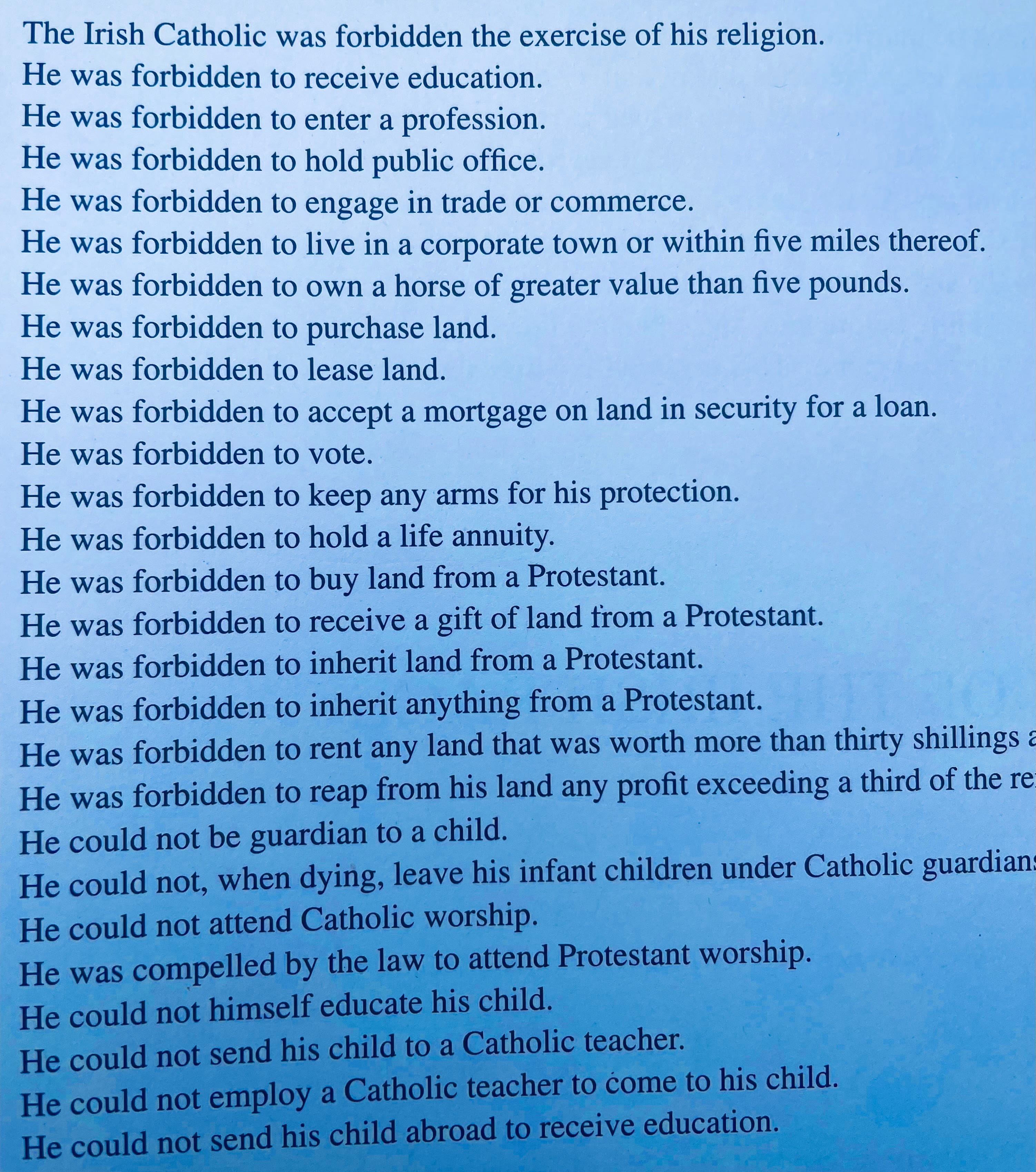
(Ach - the lovely Penal laws. If they had a tune wouldn’t you tap your toes to the rhythm of them?)
Street ballads from the early 1800s like The Wearing of the Green by playwright Dion Boucicault were both jolly and acid-tongued:
O Paddy dear, and did you hear the news that’s going round?
The shamrock is forbid by law to grow on Irish ground;
St. Patrick’s day no more we’ll keep, his colours can’t be seen.
For there’s a bloody law again(st) the wearing of the green.
And with mounting vitriol he writes:
I met with Napper Tandy, and he took me by the hand,
And he said, “How’s poor old Ireland, and how does she stand?”
She’s the most distressful country that every yet was seen,
They are hanging men and women for the wearing of the green.
Later this literary defiance became interwoven with religion; Jesus’s crucifixion a metaphor for Man/God/Country; the blessed trinity of strength. Poems that invoked divine symbolism interpreted as a cosmic outreach by the lowly citizen who needed something greater than their frail and mortal self. They needed help from a supernatural entity with strength to fight, what was then, the greatest army in the world. This idea is beautifully executed in I See His Blood Upon the Rose, by Joseph Mary Plunkett, one of the leaders martyred during the Easter Rising, co-signer of Ireland’s Proclamation of Independence and poet of rare and mystical quality:
I see his blood upon the rose
And in the stars the glory of his eyes,
His body gleams amid eternal snows,
His tears fall from the skies.
I see his face in every flower;
The thunder and the singing of the birds
Are but his voice—and carven by his power
Rocks are his written words. All pathways by his feet are worn,
His strong heart stirs the ever-beating sea,
His crown of thorns is twined with every thorn,
His cross is every tree.
It was poets like Plunkett, leaders in the seminal uprising of 1916, who really galvanized the people to take up arms and fight their imperial foe. The centuries-long tradition of intertwining verse with political activism spurred the people into revolution, (often called the Poets Rebellion) like The Rebel by another leader, Padraig Pearse, who died for the cause:
My mother bore me in bondage,
in bondage my mother was born,
I am of the blood of serfs;
The children with whom I have played,
the men and women with whom I have eaten
Have had masters over them,
have been under the lash of masters,
After the failed Easter Rising of 1916, which was initially unpopular with the general public, there was a shift in public opinion. The main reason for the shift was because of the 16 martyrs executed by the British Army; three of whom were some of Ireland’s finest poets along with two literary authors.
The Easter Rising set the stage for my family’s involvement in the War of Independence that followed four years later. A pivotal moment in the War of Independence which sparked the beginning of the end of British rule happened a stone’s throw from my mum’s home. It was called The Kilmichael Ambush and there are songs and poems galore to honour the event. (I am particularly fond of the rebel songs. After all, so many songs are, as I heard once upon a time, what poems would be if they could sing.)
Like this one that my mother bursts into every now and again:
Forget not the boys of Kilmichael
Those brave lads so gallant and true
Who fought ‘neath the green flag of Ireland
And conquered the red, white and blue
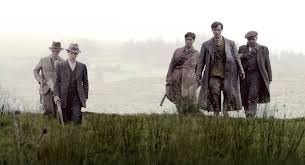
(Blurry image of actors playing the part of the Boys from Kilmichael. The shot is from the movie - The Wind that Shakes the Barley.)
One of those “boys” was my mum’s godfather, Cornelius Cotter. He was in what was known as The Flying Column, a group of volunteer soldiers who took part in the ambush. My grandmother, Anne Cotter, was part of The Brigade in Bloomers, female members of Cumann na mBan - an Irish republican women’s paramilitary organization. They were called the Brigade in Bloomers for the way they would tuck their skirts into bloomers as they cycled to deliver dispatches and supplies to the soldiers. (There’s a movie, The Wind that Shakes the Barley, about the ambush. The movie, which won the Cannes Film Festival in 2006, is one of the earlier ones featuring Cillian Murphy, our Cork-grown star.)
The song goes on to talk of the Black and Tans – a group of thugs, unleashed by Churchill after The 1916 Rising to quash the rebels:
The day that they marched into battle
They laid all the Black and Tans low
The Black and Tans were a particularly unsavoury bunch of yahoos. Many of whom had come back from WW1, uneducated, unmarried, unmoored, violent, unreasonable, bullies who committed arson, looting, beatings and murder against Irish citizens. According to historian David Leeson, “The typical Black and Tan was in his early twenties and relatively short in stature. He was an unmarried Protestant from London or the Home Counties who had fought in the British Army [...] He was a working-class man with few skills” They joined the Royal Irish Constabulary with little training, acting against the ordinary folk with such intense brutality it further swayed the Irish against the British.
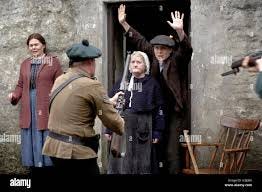
Mum tells me of how the Black and Tans would drive past my grandmother’s home in Curradrinagh and shoot at the gable end of the house to rattle my great grandparents and their children who had to dive under the kitchen table to escape being shot by a stray bullet. Of course, British authorities somehow got wind that meetings led by the 23-year-old Tom Barry, Chief of Staff of the IRA, were held around that same kitchen table. The auxiliaries and Black and Tans were intent on frightening the rebels and scaring the people into rejecting the IRA. It had the opposite effect.
The song goes on to illustrate what happened on that pivotal day, November 28th, 1920, when a convoy of British Auxiliaries left my father’s hometown of Macroom and travelled towards Dunmanway:
They were seated in two Crossley Tenders
Which led them right into their doom
They were on the road to Kilmichael
And never expected to stall
They there met the boys from the column
Who made a clean sweep of them all
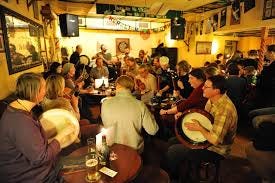
I remember being in many pubs, under the table with the other kids, drinking fizzy Tanora and eating Tayto crisps while listening to the adults belt out rebel songs:
Oh, come out ye black and tans, come and fight me like a man –
and us kids under pub tables belting along with them caught up in the delicious feverishness of it all.
It was only later in life that I learned what those songs were really about and even more recently how directly involved my grandmother and other members of the family were. They fought for independence and freedom so that everyone who followed would have a better chance at education, financial opportunities and, most importantly, dignity. The Rising and the War of Independence ultimately ended colonial rule in Ireland – except for the six counties in the North – but as the saying goes – sín scéail eile – that’s another story.
So, yes absolutely, I am very proud of Séan and all my nieces and nephews and own children who are thriving in today’s world. Poets, songwriters, musicians, lawyers, scholars, businesspeople … Decent, compassionate human beings every last one of them. They continue to do their rebel forefathers and foremothers proud and are safe to eat crisps and fizzy drinks under pub tables if they want without fear of being shot by a stray bullet.
Oh, and one more thing--yes to the proud Aunties! It's Mother's Day today in France, and we were taken out and fêted--but the Aunties at the table agreed that there needs to be an Auntie's Day too, as it's a wonderful thing to be!
Wow, what a fascinating post--thanks for the Irish history lesson. I had no idea how central poets and poetry were to Ireland's fight for freedom. Nor that discrimination against Irish Catholics was so entrenched and legal.